

Characteristics
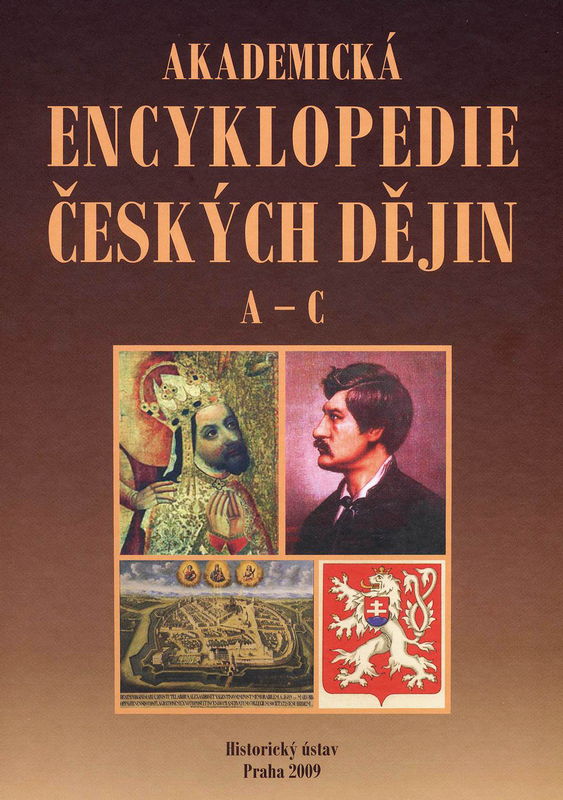
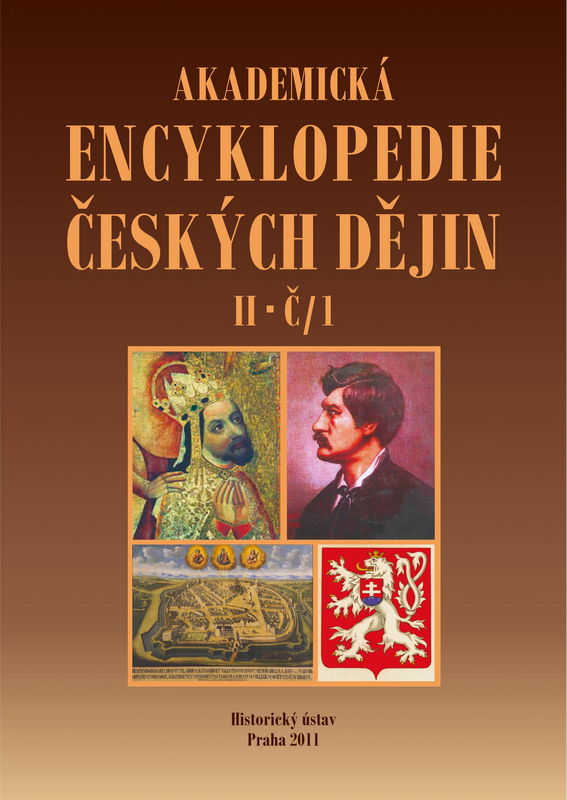
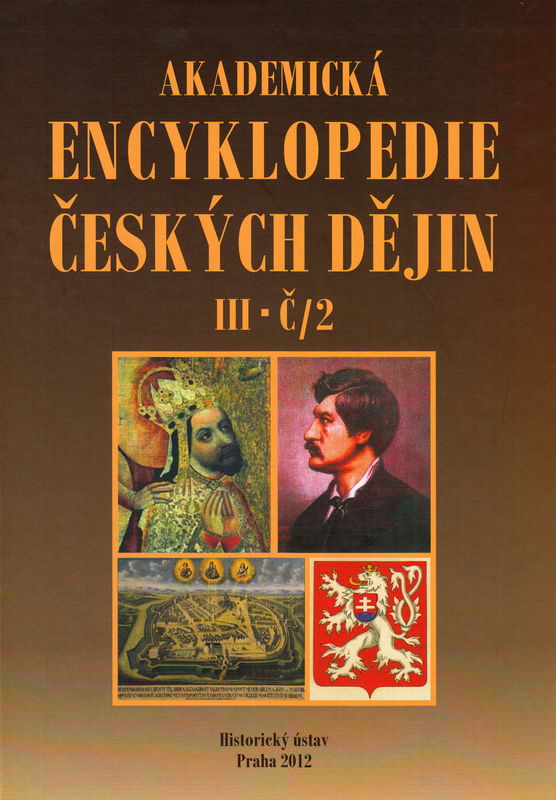
The Academic Encyclopedia of Czech History (abbr. AEČD) is an extensive summarizing publication, whose aim is to compile key concepts as well as to summarize factual accounts of events from the history of the Czech Lands from its inception to the present. The entries include key concepts from culture, politics, science, foreign affairs, state and church administration, ethnic and territorial development of the Czech Lands, etc. Yet the encyclopedia does not cover biographical entries, as they are the subject of the Biographical Lexicon of the Czech Lands. Similarly, historical-topographical entries are not included as well, because they are already summarized in specialized publications. There are two main goals of this project: to introduce basic concepts of the Czech history seen from the perspective of modern historiography - along with providing its readers with references to scientific literature - and to capture all changes of these phenomena in the course of time.
Definition
The Encyclopedia (abbr. AEČD) maps the territory of the Czech history - the areas of Bohemia, Moravia and the Czech part of Silesia. Nevertheless, its range of topics also covers regions that have - at least a bit - reached the orbit of the Czech state and Czech culture at any time during its historical development - geographically, politically, institutionally, culturally, ecclesiastically or ethnically. The territory of the Czech history is absolutely not ethnically defined - it includes, besides the Czech majority, also German, Polish, Jewish and Slovak communities occupying the historical space of the Czech Lands. In addition, the encyclopedia deals with significant minorities occuring on the “Czech” territory (including Roma) as well as with immigration (German, Russian, Ukrainian). If any key concept touches wider ties/connections of the Czech state and its historical space (The Habsburg Monarchy, Czechoslovakia), the core of that given entry lies in the Czech environment, but with regard to its international context. Additionally, relations between the Czech environment and other ethnic groups and states in all regions of the world are presented as well. Special attention is paid to Czech minorities abroad.
Periodization
The topics included in the AEČD are chosen from the beginning of historical development on the Czech territory, emphasizing topics related to the Czech state. The time limit is not determined - if it is possible, current topics are processed up to the present.
Topics
- TERRITORY (territorial changes, structural and organizational development of the Czech Lands and the Czech state; state and pre-state units, their names, their internal organization and historical changes; countries and their important parts that have been temporarily or long-term embodied to the Czech state or shared a common fate in a wider state framework (The Habsburg Monarchy), special administrative and cultural-historical parts of the Czech state - regions, urbanization, landscape and its transformation.
- POPULATION (population development; nations, minorities on the territory of today´s Czech Republic, ethnic groups in the Czech state including its pre-Slavic settlement; Czech minorities abroad; language issues, partial and thematic sections dedicated to German, Jewish, Polish and Roma minorities).
- SOCIETY (social structure, social classes and groups; estates; social organizations; social problems, social movements, social policies; health care).
- ECONOMY (economic system, development and planning processes, economic crisis; branches of economy, industry, organizational forms of economic activity; monetary systems, finance and taxes).
- CONSTITUTIONAL, ADMINISTRATIVE AND LEGAL SYSTEMS (state and governmental forms; ruling dynasties; parliamentarism; constitutions, provincial constitutions and political structures, codification and other manifestations of legislation; judiciary and justice; repressive apparatus; state administration, authorities and their officials
- POLITICS (political system, political power: its tools and bearers; political movements, coups, resistance, rebellions and revolutions; historically important affairs and assassinations; political associations and parties; political programs, manifests, memoranda and other documents).
- INTERNATIONAL RELATIONS (foreign policy, diplomacy, peace conferences; peace agreements; international agreements, alliances; bilateral relations to neighbouring and more distant countries and regions; participation in international organizations).
- MILITARY HISTORY AND WARFARE (army and its units, military institutions; military organizations; armed conflicts, battles, sieges, surrenders; domestic and foreign resistance).
- CULTURE (cultural streams; branches of culture and art; cultural institutions, societies and associations; mass media; journalism and the most important press and news agencies; sports, physical education and the Olympic Movement).
- SCIENCE AND EDUCATION (development of education, its organization; higher education, universities; scientific societies and institutions; academic historical institutes; fields of science, their development and leading figures).
- HISTORIOGRAPHY (history of historiography in the Czech Lands; bohemical historiography abroad; historical sources; archival science, museum management and library science, auxiliary sciences of history; thematic directions of research; periodization of Czech history; historical institutions; school textbooks, popularization of history).
- IDEOLOGY (philosophical and ideological streams; myths and traditions; ideological institutions).
- RELIGION (churches/denominations, ecclesiastical institutions, religious orders and their representatives; religious communities, religious streams, sects, heresies; confessions/creeds; reformation, counter-reformation, recatholisation; cults and liturgy; basic concepts of church and religious history).
Entries
All the entries are divided into six categories:
- AA
- "superentries" with a range of over 30 pages: their content is to be found in the heading, including scientific literature, and they are divided into chapters and subchapters.
- A
- entries 11 to 30 pages long: their content is to be found in the heading, including scientific literature. They may be divided into chapters, possibly subchapters.
- B
- entries 5 to 10 pages long: Their content is to be found in the heading, including scientific literature and they are divided into chapters.
- C
- entries 3 to 5 pages long: contain scientific literature.
- D
- entries on 1 page, brief description of the term.
- E
- reference entries.